Skip to content
In developmentHistory, interpretation, and research—with the evidence in view.Suggest a correction →
Skip to presidents

HISTORY MEETS AZEROTH · HISTORICAL PORTRAIT EDITION

Presidential
Class Hall.

Forty-five presidents. Twelve classes.
A different way to read the people who held power.

45 UNIQUE PRESIDENTS12 ASSIGNED CLASSES45 SOURCED QUOTES
Explore the roster ↓
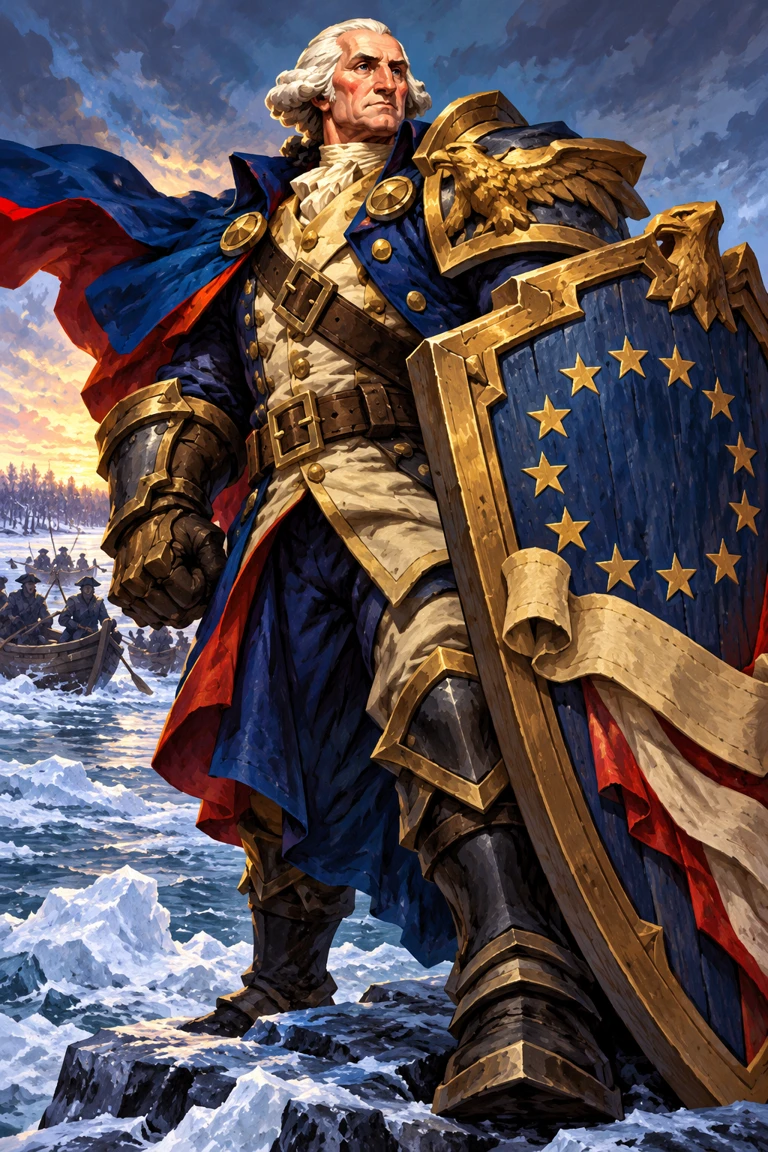
George Washington imagined as a Protection Warrior with ornate plate armor and a shield
THE FOUNDATIONAL TANKGeorge WashingtonWarrior / Protection
Compare 0/4 ↓

Showing 45 of 45 presidents

8 PRESIDENTS

Warrior

Command, endurance & confrontation

Warrior / Protection

George Washington

1789–1797

Why this class?

The foundational tank: holds the coalition together and establishes defensive boundaries.

“the preservation of the sacred fire of liberty and the destiny of the republican model of government”
Inaugural Address (excerpt) ↗April 30, 1789
Warrior / Fury

Andrew Jackson

1829–1837

Why this class?

Aggressive, confrontational, and willing to overpower institutional opposition.

“the military should be held subordinate to the civil power.”
Inaugural Address (excerpt) ↗March 4, 1829
Warrior / Arms

William Henry Harrison

1841

Why this class?

Military reputation and the identity of a veteran battlefield commander; the presidency itself was too brief for a strong judgment.

“All others lay claim to power limited only by their own will.”
Inaugural Address ↗March 4, 1841
Warrior / Arms

Zachary Taylor

1849–1850

Why this class?

A career soldier whose public identity centers on practical battlefield leadership.

“I shall make honesty, capacity, and fidelity indispensable prerequisites to the bestowal of office”
Inaugural Address (excerpt) ↗March 5, 1849
Warrior / Arms

Ulysses S. Grant

1869–1877

Why this class?

Relentless campaigning, coordinated offensives, and decisive objectives.

“The responsibilities of the position I feel, but accept them without fear.”
Inaugural Address ↗March 4, 1869
Warrior / Arms

Harry S. Truman

1945–1953

Why this class?

Blunt decision-making and willingness to own consequential choices.

“We can accomplish them only if we work together.”
Inaugural Address ↗January 20, 1949
Warrior / Protection

Dwight D. Eisenhower

1953–1961

Why this class?

Coalition commander, deterrence strategist, and stabilizing presence.

“Especially we pray that our concern shall be for all the people regardless of station, race or calling.”
Inaugural Address ↗January 20, 1953
Warrior / Fury

Donald Trump

2017–2021, 2025–present

Why this class?

Sustained confrontation, offensive momentum, and a combative public persona.

“We will face challenges, we will confront hardships, but we will get the job done.”
Inaugural Address ↗January 20, 2017

4 PRESIDENTS

Paladin

Conviction, duty & moral missions

Paladin / Protection

Abraham Lincoln

1861–1865

Why this class?

Absorbs extraordinary pressure while defending the Union and advancing emancipation.

“Why should there not be a patient confidence in the ultimate justice of the people?”
Inaugural Address ↗March 4, 1861
Paladin / Protection

William McKinley

1897–1901

Why this class?

Protective economic positioning and an orderly, institution-centered style.

“The credit of the Government, the integrity of its currency, and the inviolability of its obligations must be preserved.”
Inaugural Address ↗March 4, 1897
Paladin / Retribution

Woodrow Wilson

1913–1921

Why this class?

Frames international politics around moral principles and a mission to remake the order.

“The firm basis of government is justice, not pity.”
Inaugural Address ↗March 4, 1913
Paladin / Retribution

George W. Bush

2001–2009

Why this class?

Conviction-driven leadership and a forceful response to perceived threats.

“With a simple oath, we affirm old traditions and make new beginnings.”
Inaugural Address ↗January 20, 2001

4 PRESIDENTS

Hunter

Pursuit, reconnaissance & frontier instincts

Hunter / Marksmanship

James Monroe

1817–1825

Why this class?

Establishes a clear geopolitical boundary and focuses on the Western Hemisphere.

“Through this whole term the Government has been what may emphatically be called self-government.”
Inaugural Address ↗March 4, 1817
Hunter / Marksmanship

James K. Polk

1845–1849

Why this class?

Selects specific expansion goals and pursues them with concentrated precision.

“One great object of the Constitution was to restrain majorities from oppressing minorities or encroaching upon their just rights.”
Inaugural Address ↗March 4, 1845
Hunter / Survival

Theodore Roosevelt

1901–1909

Why this class?

Outdoorsman, expedition leader, and unusually physical political combatant.

“We have duties to others and duties to ourselves; and we can shirk neither.”
Inaugural Address ↗March 4, 1905
Hunter / Marksmanship

George H. W. Bush

1989–1993

Why this class?

Intelligence experience, diplomatic preparation, and limited military objectives.

“There is but one just use of power, and it is to serve people.”
Inaugural Address ↗January 20, 1989

8 PRESIDENTS

Rogue

Negotiation, leverage & political maneuvering

Rogue / Subtlety

Martin Van Buren

1837–1841

Why this class?

Political organization, coalition engineering, and behind-the-scenes influence.

“The thoughtful framers of our Constitution legislated for our country as they found it.”
Inaugural Address ↗March 4, 1837
Rogue / Outlaw

John Tyler

1841–1845

Why this class?

Breaks with his own party and follows an independent political course.

“The patronage incident to the Presidential office, already great, is constantly increasing.”
Address Upon Assuming the Office of President of the United States ↗April 9, 1841
Rogue / Subtlety

Rutherford B. Hayes

1877–1881

Why this class?

Negotiation and maneuvering through a disputed accession to office.

“They meant that public officers should owe their whole service to the Government and to the people.”
Inaugural Address ↗March 5, 1877
Rogue / Outlaw

Grover Cleveland

1885–1889, 1893–1897

Why this class?

Independent executive style and readiness to defy his own political allies.

“The people demand reform in the administration of the Government and the application of business principles to public affairs.”
Inaugural Address ↗March 4, 1885
Rogue / Subtlety

Warren G. Harding

1921–1923

Why this class?

Relationship-centered politics and extensive reliance on an inner circle.

“Our eyes never will be blind to a developing menace, our ears never deaf to the call of civilization.”
Inaugural Address ↗March 4, 1921
Rogue / Subtlety

Lyndon B. Johnson

1963–1969

Why this class?

Master of personal pressure, legislative positioning, and vote counting.

“Our fate as a nation and our future as a people rest not upon one citizen but upon all citizens.”
Inaugural Address ↗January 20, 1965
Rogue / Outlaw

Bill Clinton

1993–2001

Why this class?

Charismatic improvisation, triangulation, and tactical dealmaking.

“Though we marched to the music of our time, our mission is timeless.”
Inaugural Address ↗January 20, 1993

6 PRESIDENTS

Mage

Intellect, systems & controlled execution

Mage / Arcane

John Adams

1797–1801

Why this class?

Legal reasoning, political theory, and intricate institutional thinking.

“For it is the people only that are represented.”
Inaugural Address ↗March 4, 1797
Mage / Arcane

Thomas Jefferson

1801–1809

Why this class?

A polymath with an expansive intellectual vision of government.

“But every difference of opinion is not a difference of principle.”
Inaugural Address ↗March 4, 1801
Mage / Arcane

James Madison

1809–1817

Why this class?

Constitutional architecture: builds the rules governing everyone else’s abilities.

“to support the Constitution, which is the cement of the Union”
Inaugural Address (excerpt) ↗March 4, 1809
Mage / Arcane

John Quincy Adams

1825–1829

Why this class?

Scholarly diplomacy and technically ambitious national development.

“Liberty and law have marched hand in hand.”
Inaugural Address ↗March 4, 1825
Mage / Arcane

James A. Garfield

1881

Why this class?

Intellectual versatility, education, and analytical capability.

“To interpret and to execute that will in accordance with the Constitution is the paramount duty of the Executive.”
Inaugural Address ↗March 4, 1881
Mage / Frost

Barack Obama

2009–2017

Why this class?

Deliberate pacing, controlled presentation, and preference for measured positioning.

“With hope and virtue, let us brave once more the icy currents and endure what storms may come.”
Inaugural Address ↗January 20, 2009

4 PRESIDENTS

Priest

Doctrine, cohesion & institutional faith

Priest / Discipline

Millard Fillmore

1850–1853

Why this class?

Attempts to preserve national order through compromise and enforcement.

“The Government of the United States is a limited Government.”
First Annual Message ↗December 2, 1850
Priest / Discipline

Franklin Pierce

1853–1857

Why this class?

Prioritizes party cohesion and enforcement of an increasingly unstable settlement.

“You have summoned me in my weakness; you must sustain me by your strength.”
Inaugural Address ↗March 4, 1853
Priest / Holy

James Buchanan

1857–1861

Why this class?

A tentative fit: faith in established constitutional processes while the country fractures.

“This sacred right of each individual must be preserved.”
Inaugural Address ↗March 4, 1857
Priest / Holy

Joe Biden

2021–2025

Why this class?

Emphasizes empathy, reassurance, coalition maintenance, and institutional restoration.

“We've learned again that democracy is precious, democracy is fragile.”
Inaugural Address ↗January 20, 2021

1 PRESIDENT

Druid

Stewardship & restoration

Druid / Restoration

Jimmy Carter

1977–1981

Why this class?

Conservation, humanitarian service, mediation, and a repair-oriented public identity.

“A President may sense and proclaim that new spirit, but only a people can provide it.”
Inaugural Address ↗January 20, 1977

2 PRESIDENTS

Shaman

Connected systems & collective resources

Shaman / Enhancement

Benjamin Harrison

1889–1893

Why this class?

Strengthens national capacity through legislation, economic policy, and naval development.

“The oath taken in the presence of the people becomes a mutual covenant.”
Inaugural Address ↗March 4, 1889
Shaman / Restoration

Herbert Hoover

1929–1933

Why this class?

Engineering and humanitarian relief background; repair is the intended role, regardless of presidential results.

“From this strength we have contributed to the recovery and progress of the world.”
Inaugural Address ↗March 4, 1929

3 PRESIDENTS

Monk

Restraint, balance & composure

Monk / Brewmaster

William Howard Taft

1909–1913

Why this class?

A temperament-based fit: absorbs political pressure through procedural steadiness.

“Our international policy is always to promote peace.”
Inaugural Address ↗March 4, 1909
Monk / Brewmaster

Calvin Coolidge

1923–1929

Why this class?

Reserve, restraint, and a preference for maintaining equilibrium.

“If we wish to erect new structures, we must have a definite knowledge of the old foundations.”
Inaugural Address ↗March 4, 1925
Monk / Mistweaver

Gerald Ford

1974–1977

Why this class?

Reassurance and national recovery after institutional crisis.

“This is an hour of history that troubles our minds and hurts our hearts.”
Remarks on Taking the Oath of Office ↗August 9, 1974

1 PRESIDENT

Warlock

Indirect power & risky bargains

Warlock / Demonology

Richard Nixon

1969–1974

Why this class?

Operates through powerful intermediaries, secret channels, and consequential bargains.

“The greatest honor history can bestow is the title of peacemaker.”
Inaugural Address ↗January 20, 1969

1 PRESIDENT

Demon Hunter

Adversarial fixation & counterattack

Demon Hunter / Vengeance

Andrew Johnson

1865–1869

Why this class?

Resistance to congressional opponents and repeated political counterattacks define much of his presidency.

“It has power to enforce the laws, punish treason, and insure domestic tranquillity.”
First Annual Message ↗December 4, 1865

3 PRESIDENTS

Evoker

Amplification, coordination & large-scale vision

Evoker / Augmentation

Franklin D. Roosevelt

1933–1945

Why this class?

Mobilizes agencies, industry, allies, and public confidence into a coordinated effort.

“This great Nation will endure as it has endured, will revive and will prosper.”
Inaugural Address ↗March 4, 1933
Evoker / Augmentation

John F. Kennedy

1961–1963

Why this class?

Sets ambitious missions and uses inspiration to amplify national effort.

“United, there is little we cannot do in a host of cooperative ventures.”
Inaugural Address ↗January 20, 1961
Evoker / Augmentation

Ronald Reagan

1981–1989

Why this class?

Uses communication and ideological framing to energize a political coalition.

“And let us renew our faith and our hope.”
Inaugural Address ↗January 20, 1981

Compare the class readings

Choose up to four presidents from the roster.

A class is a style of play.

A Paladin assignment does not mean a president was virtuous. A Rogue assignment does not automatically imply dishonesty. A healer describes a repair-oriented approach, not its success. Some fits are tentative—especially very short presidencies.

Death Knight remains unassigned. None of these presidents offers a sufficiently strong match to the class’s defining identity to justify forcing one.

Explore the official WoW classes ↗